
Sciatica can be a debilitating condition that affects your daily life, causing pain that radiates from your lower back down to your legs. Unlike other treatments, chiropractic care offers a non-invasive, holistic approach that can provide significant relief. Chiropractors address the root causes of sciatica, helping to alleviate pain, restore mobility and help in managing sciatica.
Chiropractic care focuses on spinal adjustments and correcting misalignments. These adjustments can ease the pressure on the sciatic nerve, promoting natural healing and reducing inflammation. Additionally, chiropractors often recommend lifestyle changes and exercises to support long-term relief.
Exploring chiropractic options for managing sciatica can offer an alternative to traditional medical treatments. By addressing the underlying structural issues rather than just managing symptoms, you can achieve long-term improvement and better quality of life.
Key Takeaways of Managing Sciatica
- Chiropractic care targets the root causes of sciatica pain.
- Spinal adjustments can relieve pressure on the sciatic nerve.
- Chiropractic offers a non-invasive, holistic approach to pain relief.
Understanding Sciatica and Its Symptoms
Sciatica is a condition that affects the sciatic nerve, causing pain and other symptoms down the leg. This section explores what sciatica is and the common symptoms and trigger factors associated with it.
Defining Sciatica and Nerve Related Concerns
Sciatica occurs when the sciatic nerve, the longest nerve in your body, is irritated or compressed. It typically starts in the lower back and extends through the buttocks and down the leg. A common cause is a herniated disc which presses on the nerve.
Other causes include spinal stenosis, where the spinal canal narrows, and damage due to injury or inflammation. The nerve can also be compressed by the piriformis muscle, leading to piriformis syndrome, which mimics sciatica symptoms.
Identifying Common Symptoms and Trigger Factors
The most noticeable symptom of sciatica is pain that radiates from your lower back to your leg. This pain can range from a mild ache to a sharp, burning sensation. Sitting for long periods often worsens it.
You might also experience muscle weakness, making it difficult to move your leg or foot. Other symptoms include numbness or a tingling sensation in the leg or foot. These symptoms often occur on one side of the body. Physical activities, such as lifting heavy objects or sudden movements, can also trigger sciatica symptoms, increasing inflammation and pain.
Chiropractic Care for Sciatica Relief
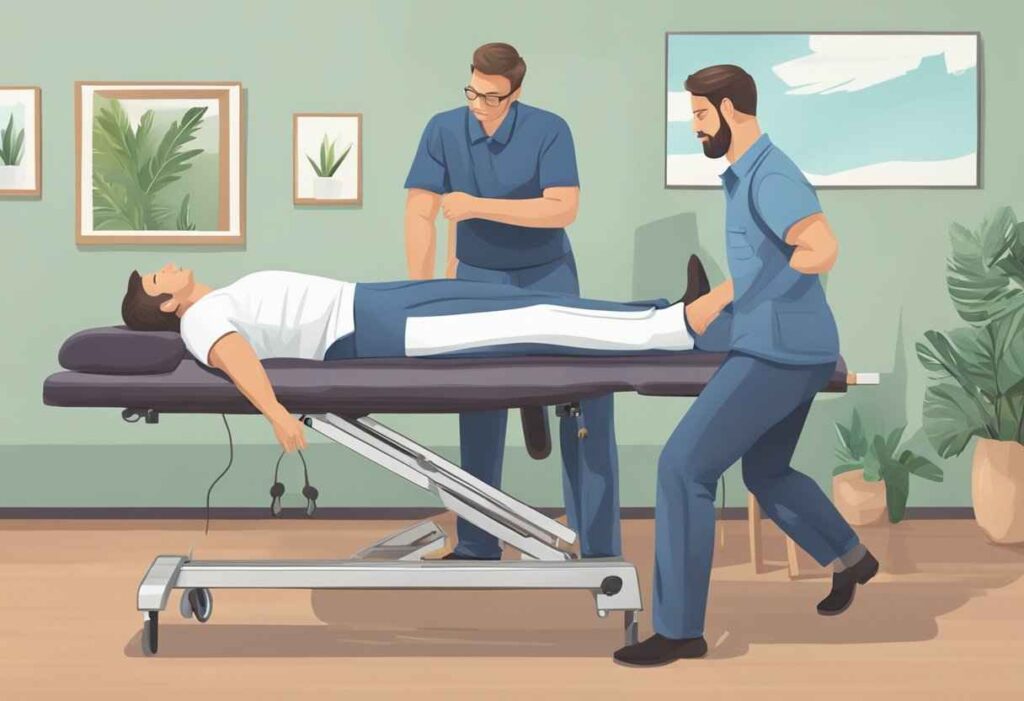
Chiropractic care offers a targeted approach to alleviating sciatica. By focusing on spinal alignment, specific adjustments, and complementary therapies, this treatment can help manage pain effectively.
The Role of Chiropractic Adjustments
Chiropractic adjustments can play a significant role in alleviating sciatica pain. These adjustments involve precise manipulation of the spine to correct any spinal misalignments that might be pressing on the sciatic nerve. Realigning the vertebrae helps reduce inflammation and alleviates nerve pressure.
Chiropractors use controlled force to perform these adjustments, which can improve nerve function and provide immediate pain relief. Patients often experience enhanced mobility and reduced pain symptoms. This form of treatment is considered safe and does not involve medication, making it a natural option for relief.
Complementary Therapies and Exercises
In addition to spinal adjustments, chiropractors may recommend various complementary therapies. These can include soft tissue therapy, which involves massage to relax tight muscles and improve blood flow. Massage helps in reducing muscle tension around the affected area, promoting healing.
Specific exercises tailored to the patient’s condition can also be highly effective. These exercises aim to strengthen the muscles supporting the spine and improve overall posture. Stretching and strengthening exercises help prevent future flare-ups and maintain spinal health.
Combining these therapies with adjustments ensures that treatment addresses both the underlying cause and symptoms of sciatica.
Creating a Personalised Treatment Plan
Each patient’s experience with sciatica is unique, so a personalised treatment plan is crucial. A chiropractor will assess your medical history, symptoms, and lifestyle to create a tailored approach. This plan may include a combination of spinal adjustments, specific exercises, and soft tissue therapies.
Regular evaluations will track progress and allow for adjustments to the treatment as needed. A personalised plan ensures that therapy is not only effective but also aligns with the patient’s particular needs and recovery goals.
A well-constructed plan enhances the healing process, providing relief and helping to prevent future occurrences of sciatica pain.
How Chiropractic Intervention Can Prevent Sciatica
Chiropractic care not only helps in treating sciatica but can also prevent its occurrence by maintaining spinal health and promoting beneficial lifestyle modifications.
Maintaining Spinal Health and Posture
Good spinal health is key to preventing sciatica. Chiropractic adjustments help keep your spine aligned, reducing pressure on your sciatic nerve. Regular adjustments correct misalignments, promoting proper posture and balance.
Proper posture can also prevent recurrence of sciatica pain. Chiropractors offer expert advice on maintaining correct posture in daily activities. This includes sitting, standing, and walking. Proper posture supports a healthy spine and reduces the risk of nerve compression.
Regular visit to a chiropractor ensures your spine remains in optimal health, improving your quality of life.
Importance of Lifestyle Modifications
Lifestyle modifications play a crucial role in preventing sciatica. Chiropractors recommend specific exercises that strengthen core muscles, which support your spine. Activities like walking and stretching maintain flexibility and reduce the risk of nerve pinching.
Maintaining a healthy weight is essential. Extra weight puts pressure on your spine, increasing the chance of sciatica. Chiropractors give dietary advice to help you manage your weight effectively.
Stretching routines are also advised to keep your muscles flexible. Regular stretching prevents muscle imbalances that can lead to spinal misalignments. Incorporating these lifestyle changes ensures long-term prevention and managing sciatica.
Evaluating Risks and Understanding Alternative Treatments
When considering chiropractic care and other treatments for sciatica, it’s important to weigh the risks and explore alternative options. Both non-invasive and invasive treatments can offer relief but come with their own set of potential complications.
Risks Associated with Chiropractic and Other Treatments
Chiropractic care for treating and managing sciatica generally involves manual adjustments to the spine. While many find relief from these adjustments, there are potential risks. Misalignment of the spine during treatment could lead to further nerve pain or discomfort. Some patients might also experience soreness or stiffness after a session.
Medications for sciatica, such as pain relievers and anti-inflammatories, carry their own risks. Long-term use can lead to dependency and side effects, including stomach issues and liver damage. It’s important to manage these medications carefully under a doctor’s supervision.
Exercise and physical therapy are often recommended to improve strength and flexibility, reducing recurrence of pain. While these methods are generally safe, they may not provide immediate pain relief, and incorrect form during exercises can aggravate symptoms.
Comparing Surgery and Other Invasive Procedures
For severe sciatica cases, surgery and other invasive procedures like epidural steroid injections are considered. Surgery, such as a discectomy or laminectomy, can offer significant relief by removing part of a herniated disc or bone that’s pressing on the nerve. However, these procedures involve risks like infection, blood clots, and even nerve damage.
Epidural steroid injections can reduce inflammation around the sciatic nerve, offering temporary pain relief. The risks include potential infection at the injection site, increased pain, and in rare cases, nerve damage.
When evaluating these treatment options, it’s essential to consider both the immediate risks and the long-term impact on your quality of life. Chiropractic care and physical therapy might provide lasting relief without the need for invasive procedures, but your specific condition and circumstances will guide the best comprehensive approach for treatment.
It’s recommended to discuss all potential risks and benefits with healthcare professionals to make an informed decision.
Frequently Asked Questions
Discover answers to common questions about chiropractic care and its role in treating and managing sciatica. Learn about the safety, treatment duration, and benefits of chiropractic methods.
Can a chiropractor exacerbate symptoms of sciatica?
It’s rare, but possible if treatments are not done correctly. A knowledgeable chiropractor will carefully assess your condition and customise treatment to avoid aggravating symptoms. Always consult with a licensed, experienced professional.
Is it advisable to consult a chiropractor or a medical doctor for sciatica?
Both professionals can be helpful. A chiropractor can provide non-invasive pain relief and improve spinal function, while a medical doctor can offer medication or surgery for severe cases. It often depends on the severity and your personal preference.
How many sessions with a chiropractor are typically required for managing sciatica?
The number of sessions varies. Some people find significant relief after a few visits, while others may need ongoing treatment. The chiropractor will develop a plan based on your specific needs and progress.
What relief can chiropractic care offer for sciatica sufferers?
Chiropractic care can provide pain relief, reduce inflammation, and improve mobility. Techniques like spinal adjustments, mobilisation, and massage can help alleviate symptoms and enhance overall well-being.
What duration does chiropractic treatment for managing sciatica normally entail?
The duration can differ. Some patients may need treatment for several weeks, while others might require a few months. The chiropractor will monitor your progress and adjust the treatment plan accordingly.
What are the comparative benefits of chiropractic care versus physiotherapy for sciatica?
Chiropractic care focuses on spinal adjustments and alignment to relieve pressure on nerves. Physiotherapy aims to strengthen muscles and improve flexibility. Both have unique benefits and can be effective; sometimes, a combination of both methods is recommended.
Total Health Clinics – Click on any of the links below for direct access to the clinic and treatment that you need:
Cambridge chiro, Cambridge physio, Cambridge osteo, Cambridge massage, Peterborough chiro, Peterborough physio, Peterborough osteo, Peterborough massage Kings Lynn chiro, Kings Lynn osteo, Kings Lynn massage and Kings Lynn physio
